
Understanding VFX for Actors: How Visual Effects Shape Modern Performances
A practical guide for actors to learn how VFX works, how to perform in VFX-heavy environments, and how to stay relevant in a technology-driven industry.
Introduction
Visual Effects (VFX) are no longer limited to fantasy and superhero films — they now play a major role in dramas, commercials, OTT shows, and even low-budget productions.
For actors, this means adapting to environments where characters, locations, creatures, lighting, and even scene partners may not physically exist during shooting.
Understanding VFX is not about learning software. It’s about learning how to act truthfully in imaginary environments with technical precision.
This article explains how VFX impacts actors, the skills required, and how to prepare for VFX-centered sets.

2. What VFX Means for Today’s Actors
Purpose
Help actors understand the growing importance of VFX in film, TV, and OTT productions.
Why VFX Matters More Than Ever
Many scenes are shot before the environment is built
Actors often interact with invisible creatures, props, or worlds
Eye-line accuracy affects believability
VFX can extend, duplicate, or enhance an actor’s performance
Even realistic films use subtle VFX (sky replacements, environments, crowds)
Where VFX Is Common Today
Sci-fi / fantasy
Action films
Historical period dramas
Creature interactions
De-aging or age-enhancement
Crowd creation
CG environments
Stunt sequences
💡 Pro Tip:
Even a simple city street scene may be heavily VFX-modified. The actor must stay adaptable.
3. Acting with Green Screens, Markers & Virtual Sets
Purpose
Teach actors how to perform believably when the world is not physically present.
Challenges Actors Face
No real environment to react to
Minimal physical cues
Harder emotional immersion
Technical markers instead of co-actors
Precise camera restrictions
Limited freedom of movement
Skills for Green Screen Acting
Strong imagination — visualize the world as if it exists
Precise eye-lines — looking at the exact spot VFX teams need
Controlled movement — avoiding gestures that break VFX alignment
Awareness of frame — VFX-heavy shots require actors to stay within strict boundaries
Practical Exercise
Place three small stickers on a wall.
Assign them different imaginary objects (giant creature, window, ship).
Act a short scene responding to them.
Record and analyze eye-line accuracy.
⚠️ Common Mistake:
Looking “around” the imaginary object instead of directly at it.
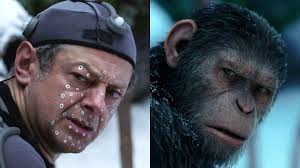
4. Performance Capture, Facial Tracking & Digital Doubles
Purpose
Explain how actors perform for motion capture and VFX-driven characters.
What Performance Capture Requires
Body suits with reflective markers
Head rigs with cameras capturing facial expressions
Limited costumes
No full sets
Precise physical control
Consistent emotional expression
Where It’s Used
Creature performances
De-aging of actors
Stunt doubles replaced digitally
CG characters (robots, aliens, fantasy beings)
Digital doubles for dangerous or large-scale scenes
Why Actors Are Essential
VFX teams need real emotional data, including:
Micro-expressions
Breathing patterns
Speech patterns
Weight shifts
Internal emotional transitions
AI or CG cannot create emotional truth — it can only enhance what the actor provides.
💡 Pro Tip:
Performance capture is closer to theatre acting — rely on your imagination and full-body storytelling.

5. Emotional Truth in CG-Enhanced Worlds
Purpose
Help actors maintain authenticity even when scenes feel artificial.
Why Emotional Truth is Harder in VFX Scenes
Stimuli are imaginary
Partner reactions are missing
High pressure to “look correct” technically
Heavy focus on physical precision
How to Maintain Emotional Truth
Build the emotional world BEFORE stepping on set
Use sensory imagination (smell, touch, sound)
Prepare emotional beats away from technical markers
Learn to “self-trigger” emotional states even without environment
Example
If you are supposed to see a collapsing building:
Instead of staring at a green screen, imagine:
the sound
the dust
the heat
the shockwave
the smell
the fear
Emotional detail creates visual detail.
⚠️ Common Mistake:
Overacting to compensate for lack of physical environment.
Subtlety is still essential.
6. How Actors Can Train for VFX-Based Productions
Purpose
Provide practical steps to prepare for VFX-heavy roles.
Training Areas
Imagination & Visualization
Practice reacting to non-existent objects or beings.Physical Control
Neutral posture, consistent body angles, precise movement.Eye-Line Discipline
Train to hit exact gaze targets without wandering.Voice Projection for Empty Spaces
Sound behaves differently on VFX sets — use controlled projection.Technical Awareness
Learn basic camera dynamics, framing, and marker systems.
Actor’s VFX Prep Routine (10 minutes)
3 min — Eye-line drills with wall markers
2 min — Reacting to imaginary objects
3 min — Controlled movement inside a small taped box
2 min — Emotional activation without environment
💡 Pro Tip:
Watch behind-the-scenes of films like Avatar, Planet of the Apes, RRR, and The Avengers to see how actors work with VFX.
Ready to Level Up Your Performance?
Master these warm-ups with personalized coaching. Get weekly acting drills, technique breakdowns, and performance tips delivered to your inbox.
Disclaimer: The information provided is for general informational purposes only and should not be considered professional advice. We do not make any warranties about the accuracy or reliability of the content. Any reliance you place on such information is strictly at your own risk. Please consult a qualified professional before making any decisions. For queries, contact: administrator@abs.media.