
How Technology (AI, CGI, Virtual Production) Is Changing Actor Performances
Exploring how AI, CGI, and virtual production are transforming performances in today’s film industry.
- Table of Contents
- 1. Introduction
- 2. AI Is Changing How Actors Prepare and Perform
- 3. CGI Makes Impossible Performances Possible
- 4. Virtual Production: The Future of Film Sets
- 5. Technology Is Expanding Opportunities for Actors
- 6. Challenges Actors Face With New Technology
- 7. How Actors Can Adapt to the Digital Future
- 8. Conclusion
Introduction
Technology is moving fast, and it is transforming every industry — including acting and filmmaking. Today, tools like Artificial Intelligence (AI), Computer-Generated Imagery (CGI), and Virtual Production are changing how actors perform, how directors plan scenes, and how movies are created. This shift is not just a trend; it is becoming the new normal in the film and entertainment world.
2. AI Is Changing How Actors Prepare and Perform
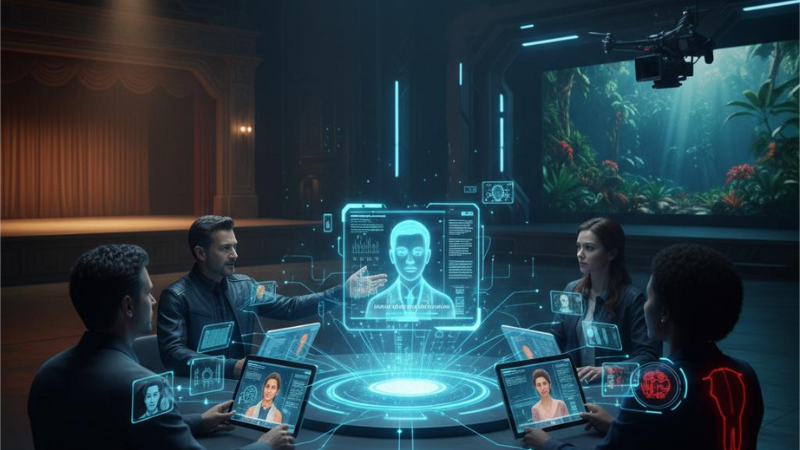
AI is now being used in many parts of filmmaking and acting. It helps with scriptwriting, character analysis, de-aging actors, dubbing, and even creating digital doubles
- AI Tools for Script and Character Study
- Actors can use AI-powered apps to:
- Understand character emotions
- Break down dialogues
- Improve pronunciation and accents
- Practice lines with digital co-actors
3. CGI Makes Impossible Performances Possible
CGI (Computer-Generated Imagery) has been around for years, but its quality has improved greatly. It lets actors perform in worlds that do not exist physically.
How CGI Helps Actors
- Creates fantasy worlds (space, oceans, imaginary planets)
- Builds creatures, robots, and superheroes
- Adds realistic weather or explosions without risk
The Actor’s Role in a CGI World
Acting in CGI-heavy films requires imagination. Many scenes are shot on green screens, meaning:
- The actor must imagine the world
- Objects and creatures are not physically present
- Emotional delivery becomes more challenging
Yet actors today are becoming experts at this, making CGI worlds feel real for audiences.
4. Virtual Production: The Future of Film Sets
Virtual Production is one of the biggest technological revolutions in the industry. It combines LED screens, game engines, real-time graphics, and live cameras to create a fully digital set.
Movies like The Mandalorian and Avatar use this technology.
Benefits of Virtual Production for Actors
- Actors can actually see the digital environment around them
- Lighting and reflections look more realistic
- Scenes can be changed instantly
- No need to shoot in dangerous or expensive locations
5. Technology Is Expanding Opportunities for Actors
Instead of replacing actors, technology is creating new roles and career paths.
New Acting Opportunities
Actors today can work in:
- Motion capture (MoCap)
- Performance capture
- Video games
- Animated movies
- VR films
- AI voice acting
This means more chances to work, even for newcomers.
6. Challenges Actors Face with New Technology
Actors today face several challenges as technology takes a larger role in filmmaking. Tools like AI, CGI, motion-capture suits, and virtual production demand new skills that many performers are not used to. Instead of acting with real sets, props, or co-actors, they often have to perform in front of green screens or digital markers, which can feel uncomfortable and unnatural. Understanding technical setups, learning new equipment, and adjusting to fast digital production workflows can also be difficult for actors who are used to traditional methods.
7. How Actors Can Adapt to the Digital Future
To adapt to the digital future, actors need to continuously update their skills and stay open to learning. Training in motion-capture performance, voice acting, and virtual production environments can help them feel confident and ready for modern film sets. Attending workshops, working with digital tools, and practicing in technology-driven spaces can make a big difference. When actors combine their traditional acting craft with new digital techniques, they not only stay relevant but also become more versatile and competitive in the industry.
Conclusion
Technology — whether AI, CGI, or Virtual Production — is not replacing actors. Instead, it is transforming the way they work, perform, and connect with audiences. Actors who learn to work with these tools will have more opportunities, more creative freedom, and a stronger career in the evolving entertainment industry.
The future of acting is a blend of talent and technology, and those who adapt will shine the brightest.
Ready to Level Up Your Performance?
Master these warm-ups with personalized coaching. Get weekly acting drills, technique breakdowns, and performance tips delivered to your inbox.
Disclaimer: The information provided is for general informational purposes only and should not be considered professional advice. We do not make any warranties about the accuracy or reliability of the content. Any reliance you place on such information is strictly at your own risk. Please consult a qualified professional before making any decisions. For queries, contact: administrator@abs.media.