
The Power of Silence in Acting
The Power of Silence in Acting highlights how actors convey deep emotions and meaning through expressions, body language, and presence without relying on dialogue.

- Table of Contents
- 1.Introduction to Acting Without Dialogue
- 2. Understanding Non-Verbal Communication in Acting Without Dialogue
- 3. Facial Expressions in Silent Acting Performance
- 4. Body Language in Acting Without Dialogue
- 5. The Role of Stillness and Pauses in Acting Without Dialogue
- 6. Emotional Depth in Acting Without Dialogue
- 7.Camera Awareness in Silent Acting Techniques
- 8.Challenges of Acting Without Dialogue
- 9.Practicing Silent Acting for Mastery
1.Introduction to Acting Without Dialogue
Acting without dialogue is one of the most powerful and challenging forms of performance in cinema. Instead of relying on words, actors communicate emotions through expressions, movement, and presence. This technique allows audiences to feel the character’s emotions more deeply because it removes the barrier of language.
In many iconic films, silence has been used to create tension, intimacy, and realism. A single look or pause can express more than a long speech. That is why mastering silent acting is essential for every serious actor.
2. Understanding Non-Verbal Communication in Acting Without Dialogue
Non-verbal communication is the foundation of acting without dialogue. It includes all the ways actors express meaning without speaking.
Key Elements:
- Facial expressions
- Eye contact and gaze
- Hand gestures
- Body posture
Actors must learn how to control these elements to deliver a clear and believable performance.
🔹 Tips:
- Observe people in real life and notice how they express emotions
- Practice expressing feelings like anger, joy, or sadness without speaking
- Record your practice sessions to improve
💡 Pro Insight:
The audience reads your face before they understand your character.
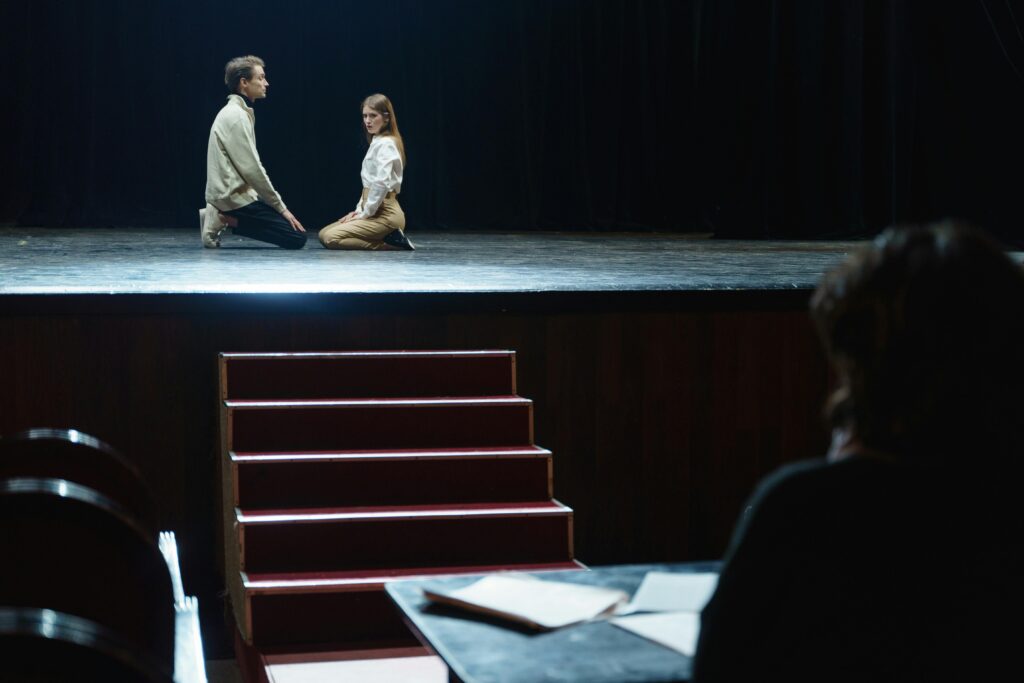
3. Facial Expressions in Silent Acting Performance
Facial expressions are the core of silent acting performance. Even the smallest movement in the eyes or lips can convey strong emotions.
Actors should focus on:
- Micro-expressions (tiny emotional signals)
- Eye intensity and direction
- Subtle changes in facial muscles
⚠️ Common Mistake:
Many beginners exaggerate expressions. In cinema, especially close-ups, subtlety creates more impact.
🔹 Tips:
- Practice in front of a mirror
- Watch emotional scenes and study expressions
- Try expressing emotions using only your eyes
4. Body Language in Acting Without Dialogue
Body language plays a crucial role in acting without dialogue. It supports and enhances emotional expression.
Important Aspects:
- Posture shows confidence or fear
- Movement speed reflects emotion
- Gestures reveal intention
For example, a slouched posture can show sadness, while upright posture reflects confidence.
🔹 Tips:
- Practice walking like different characters
- Use slow movements for dramatic scenes
- Avoid unnecessary or random gestures
💡 Suggestion:
Your body should speak even when your voice is silent.

5. The Role of Stillness and Pauses in Acting Without Dialogue
Stillness is a powerful tool in acting without dialogue. A pause can create tension, suspense, or emotional depth.
Actors must understand:
- When to stay still
- When to move
- How long to hold a pause
Stillness allows the audience to focus on emotions and absorb the moment.
💡 Pro Tip:
Sometimes doing nothing is the strongest performance.
6. Emotional Depth in Acting Without Dialogue
To succeed in acting without dialogue, actors must develop strong emotional depth. This means feeling the character’s emotions internally before expressing them externally.
Techniques:
- Emotional memory (recalling real feelings)
- Imagination (creating fictional emotions)
- Character analysis
🔹 Suggestions:
- Write your character’s inner thoughts
- Practice reacting silently to situations
- Stay connected to your emotional state
💡 Insight:
True emotion is felt, not performed.
7. Camera Awareness in Silent Acting Techniques
Camera awareness is essential in silent acting techniques. Since there is no dialogue, the camera captures every detail of the actor’s face and movement.
Actors must:
- Control expressions in close-ups
- Maintain eye focus
- Avoid overacting
🔹 Tips:
- Practice acting in front of a camera
- Watch your recordings carefully
- Learn basic camera angles
💡 Suggestion:
Act for the camera, not for the stage.
8. Challenges of Acting Without Dialogue
There are several challenges in acting without dialogue:
Common Challenges:
- Expressing emotion clearly
- Avoiding exaggeration
- Keeping audience engagement
🔹 Solutions:
- Practice regularly
- Study silent films
- Get feedback from others
💡 Pro Tip:
Clarity is more important than complexity.
9. Practicing Silent Acting for Mastery
Mastering acting without dialogue requires continuous practice and observation.
Practice Methods:
- Daily expression exercises
- Watching global cinema
- Performing short silent scenes
🔹 Suggestions:
- Record and review your performance
- Experiment with different emotions
- Collaborate with other actors
💡 Final Thought:
Consistency turns skill into mastery.
Ready to Level Up Your Performance?
Master these warm-ups with personalized coaching. Get weekly acting drills, technique breakdowns, and performance tips delivered to your inbox.
Disclaimer: The information provided is for general informational purposes only and should not be considered professional advice. We do not make any warranties about the accuracy or reliability of the content. Any reliance you place on such information is strictly at your own risk. Please consult a qualified professional before making any decisions. For queries, contact: administrator@abs.media.